
Initial Summary
The marriage interview before USCIS is one of the most critical moments in the adjustment of status process. It is not just about proving the marriage is legal, but about convincing the officer that the relationship is genuine. In this article we explain what USCIS evaluates, what types of evidence strengthen a case, what the most common red flags are, and what happens when a Stokes interview is ordered.
Marrying for love does not automatically make the immigration process simple. Many real couples face difficulties during the residency interview simply because they were not prepared or did not present adequate evidence.
USCIS has the responsibility to verify that every marriage used as the basis for an immigration petition is genuine and was not entered into primarily to obtain an immigration benefit. This means the officer will not only review documents but will evaluate the consistency of responses, body language, and the history of the relationship.
Adequate preparation can make the difference between an approval and a deeper investigation. Knowing what USCIS looks for, what questions they might ask, and what signals could raise suspicion is essential for any couple facing this process.
What Does USCIS Evaluate During the Marriage Interview?
USCIS does not look for perfect marriages; they look for real ones.
The primary goal of the USCIS officer is to determine whether the marriage is bona fide. This means the relationship was established with the genuine intention of building a life together, not as a means to obtain immigration status.
- Documentation demonstrating cohabitation and shared life.
- Consistency in the responses of both spouses.
- Detailed history of how they met and developed the relationship.
- Mutual knowledge about each other's daily life.
- Evidence that the relationship remains active and committed.
Key Evidence: What Strengthens and What Weakens Your Case
Not all evidence carries the same weight
Presenting solid evidence is fundamental. However, not all documents have the same value in the eyes of a USCIS officer. There is an important difference between strong evidence and weak evidence.
Strong Evidence
- Joint bank accounts with regular activity.
- Tax returns filed jointly.
- Lease or mortgage in both names.
- Insurance policies listing the spouse as beneficiary.
- Shared utility bills (electricity, water, internet).
- Beneficiary documents on retirement plans or life insurance.
Weak Evidence (on its own)
- Photos together without context or clear dates.
- Affidavits from family members without specific details.
- Evidence showing only a single date or event.
- Social media without real or ongoing interaction.
Common Questions and "Trap" Questions at the Interview
Prepare without memorizing answers
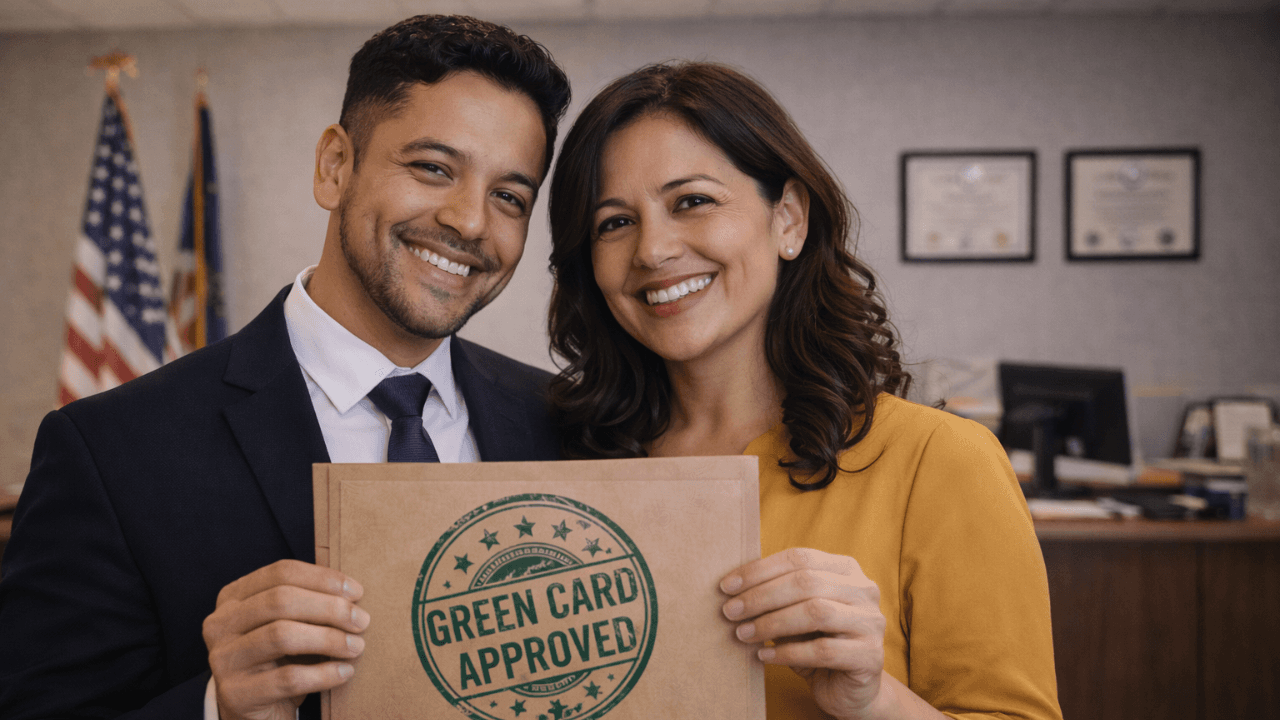
The officer may ask questions that seem simple but are designed to evaluate whether you truly know your partner and live together. It is not about memorizing answers but about naturally knowing the details of your shared life.
Standard Questions
- How did you meet? Who introduced you?
- Who proposed? How was the proposal?
- Where do you currently live? Describe the layout of your home.
- Who pays the main bills? Do you have shared accounts?
- What did you do last weekend?
- When is your partner's birthday? How did you celebrate it?
"Trap" or Detail Questions
- Which side of the bed does each of you sleep on?
- What did you have for dinner last night? Who cooked?
- What brand of toothpaste do you use?
- What television show did you watch together recently?
- Does your partner have any scars or tattoos? Where?
- What time does your partner usually wake up?
What Is a Stokes Interview and When Is It Used?
Separate interviews under greater scrutiny
A Stokes interview occurs when the USCIS officer has significant doubts about the authenticity of the marriage after the initial interview. In this procedure, the couple is separated and each spouse is interviewed individually.
- 1The couple is separated into different rooms.
- 2Each spouse answers the same detailed questions separately.
- 3Answers are compared to identify inconsistencies.
- 4Very specific questions about daily life are asked.
- 5The officer evaluates not only the answers but the confidence and naturalness of the responses.
Red Flags That Could Raise Suspicion
Factors that USCIS examines more carefully
There are certain patterns and circumstances that USCIS considers as possible indicators of a fraudulent marriage. Having one or more of these factors does not mean the case will be denied, but it could trigger more intense scrutiny.
- Marriage shortly after a deportation order or during removal proceedings.
- Significant age difference between spouses without contextual explanation.
- The citizen or resident has filed multiple marriage petitions for different individuals.
- Contradictory information between forms and interview responses.
- Complete absence of shared finances or evidence of cohabitation.
- Spouses do not speak a common language fluently.
- They cannot describe basic details of each other's daily life.
- Relationship history with significant gaps or inconsistencies.
Consequences of Immigration Marriage Fraud
A risk that affects both spouses
Marriage fraud is a federal crime that USCIS takes extremely seriously. The consequences affect not only the foreign applicant but also the citizen or resident who participated in the scheme.
- Permanent immigration bar: the person could become permanently inadmissible to the United States.
- Denial of future petitions: any future immigration application could be affected.
- Criminal consequences: fines of up to $250,000 and up to 5 years in federal prison.
- The citizen also faces charges: participating in a fraudulent marriage is a crime for both parties.
- Revocation of benefits already granted: even permanent residency could be revoked.
Hypothetical Example
Imagine a couple that has been living together for two years. They met at work, share household expenses, and have a stable relationship. However, they maintain separate bank accounts, do not have a joint lease, and most bills are in only one person's name.
Despite their marriage being completely real, the lack of shared documentation could raise doubts during the interview. An officer might interpret the absence of commingled finances as a sign that the relationship is not genuine. In a case like this, it would be important to supplement with other types of evidence: correspondence addressed to both at the same address, detailed statements from people who know the relationship, photographs with clear temporal context, and communications demonstrating life as a couple.
Practical Tips to Prepare for Your Interview
Concrete steps before interview day
Preparation does not mean making up answers; it means organizing to present the relationship clearly and coherently.
- Carefully review all submitted forms and ensure the information is consistent.
- Organize evidence chronologically and by category to facilitate presentation.
- Review important dates in the relationship: when you met, first date, proposal, wedding.
- Be honest at all times. A discovered lie is far worse than an imperfect answer.
- If you do not remember something exactly, it is better to say "I don't remember" than to make up an answer.
- Practice describing your daily routine and your partner's routine naturally.
- Bring organized copies of all evidence and originals for verification.
- If there are factors that could appear as red flags, prepare clear explanations with supporting evidence.
Conclusion
The USCIS marriage interview is not about demonstrating a perfect marriage but about presenting a coherent relationship backed by real evidence and adequate preparation. Immigration officers are trained to distinguish genuine relationships from fraudulent arrangements, and the best strategy will always be honesty combined with solid documentation.
If you are about to face a marriage interview, do not leave preparation to chance. Consulting with an immigration attorney could help you organize your evidence, identify potential red flags, and present your case as strongly as possible.
Consult with an Attorney NowSources Cited
- USCIS – Policy Manual: Bona Fide Marriage Determination
- INA § 204(c) – Marriage Fraud Provisions
- USCIS – Adjustment of Status (Form I-485)
- American Immigration Lawyers Association – Marriage-Based Immigration Resources