

Initial Summary
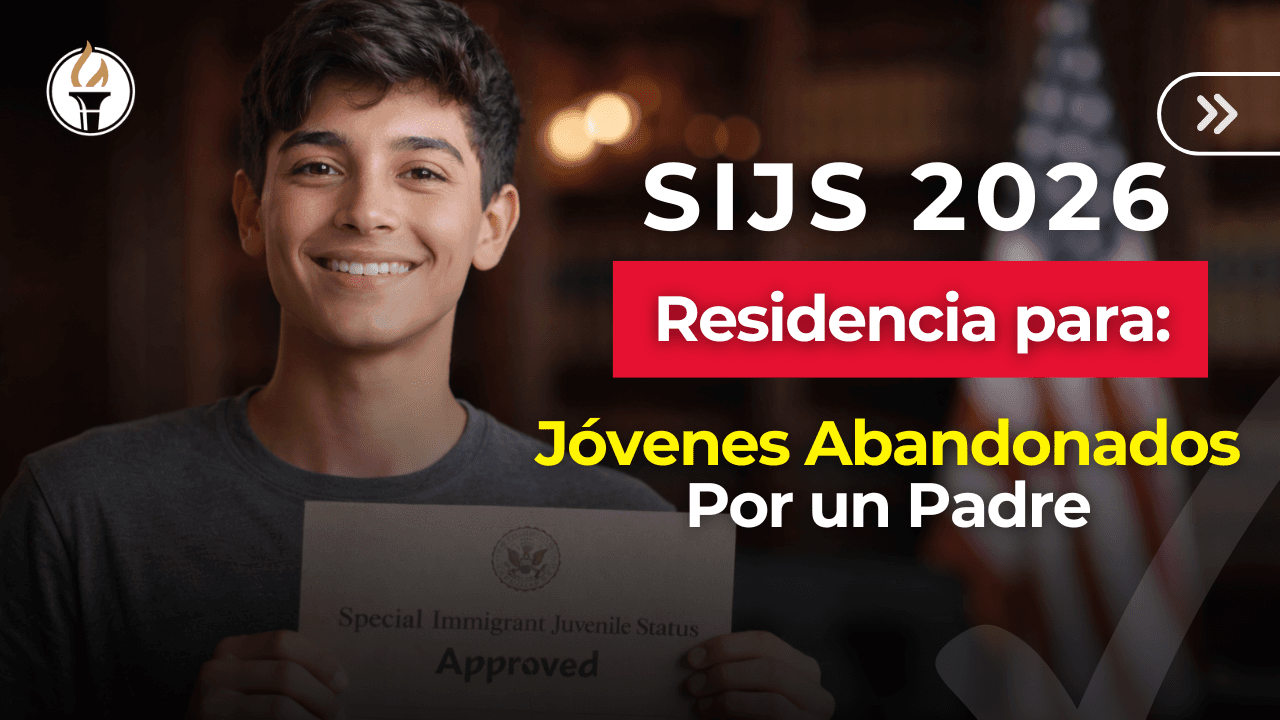
Many families are unaware that a young person living with one parent who was abandoned, abused, or neglected by the other could qualify for an immigration benefit known as SIJS (Special Immigrant Juvenile Status). This article explains what SIJS is, who might qualify, what role the state judge plays, and how it could open a path to permanent residency. It is not an automatic process, but for many young people it could represent a real opportunity to regularize their immigration status.
Growing up without one parent is a reality faced by thousands of young immigrants in the United States. Some were abandoned as children, others left their country without one of their parents being involved in their upbringing, and many simply grew up knowing that one of their parents "was not there." This absence, far from being just an emotional wound, could have legal implications that many are unaware of.
There is a very common misconception: that in order to have any immigration benefit as a minor, one needs to have crossed the border alone, without any family member. The reality is different. SIJS is not exclusively for unaccompanied minors. It could also apply to young people who live with one parent but were abandoned, abused, or neglected by the other. In other words, you do not need to be completely alone to explore this option.
In this article we explain the fundamental aspects of SIJS, from age requirements to the role of the state judge, with the goal of helping families who might qualify get informed before time runs out. Because in these cases, the young person's age is the clock that never stops.
What Is SIJS (Special Immigrant Juvenile Status)?
SIJS is not an automatic visa; it is a process that combines state court and federal immigration law.
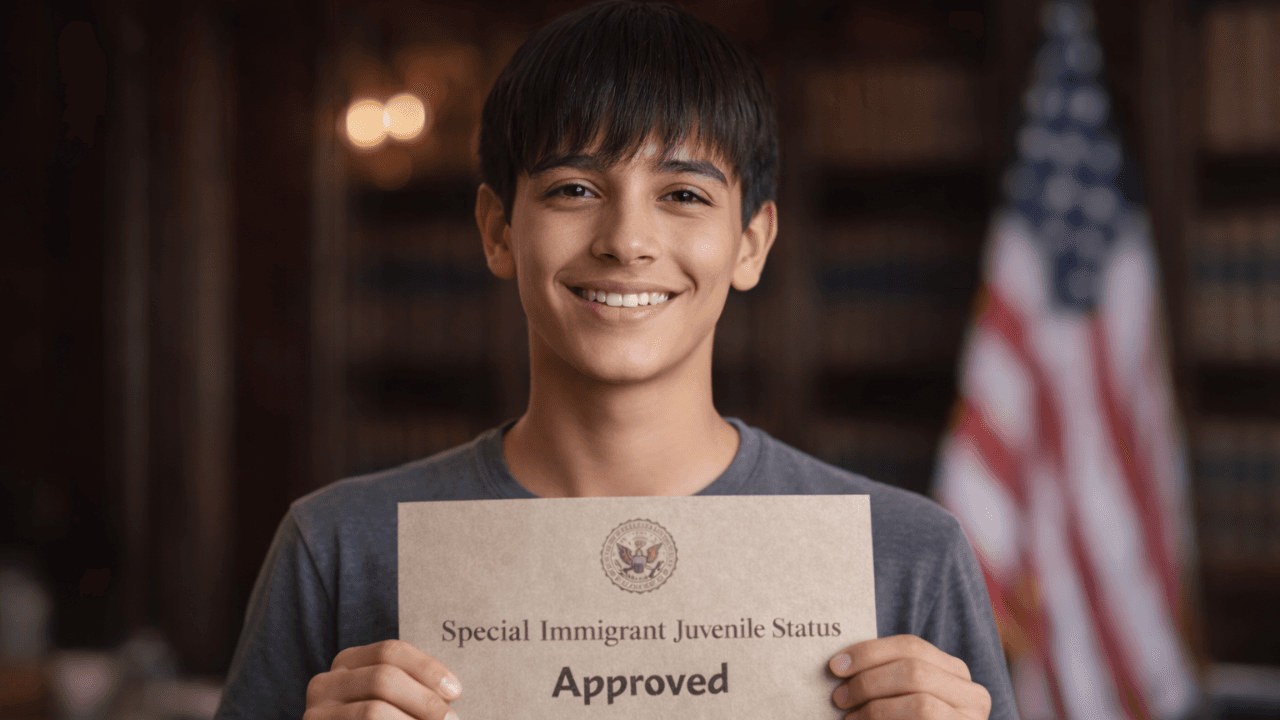
SIJS is a special immigration classification created by the United States Congress to protect young immigrants who have been victims of abandonment, abuse, or neglect by one or both parents. Unlike other forms of immigration relief, SIJS requires the participation of two different legal systems: first, a state court (such as a family or juvenile court) must issue specific findings about the young person's situation; then, the case moves to the federal level before USCIS.
- It was originally created in 1990 and has been modified several times since then.
- It is not a visa in itself, but rather a classification that allows one to apply for permanent residency.
- It requires a state judge to determine that the youth was abandoned, abused, or neglected.
- It combines state family law with federal immigration law.
- Each case is evaluated individually; there is no automatic approval.
Age Requirements: The Most Critical Factor
Time is the silent enemy of SIJS
One of the most important and urgent aspects of SIJS is the applicant's age. Federal law requires that the young person be under 21 years old at the time USCIS adjudicates the petition. However, state court requirements may vary depending on the state where the case is filed.
- Federal law requires the petitioner to be under 21 years old.
- In many states, family court only has jurisdiction over minors under 18.
- Some states extend juvenile court jurisdiction to 19, 20, or 21 in certain contexts.
- If the youth reaches the age limit before the process is complete, they could lose eligibility.
- It is essential to start the process as early as possible to prevent time from running out.
- An experienced attorney could evaluate whether the young person's age still allows starting the process in their state.
Both Parents Do Not Need to Have Abandoned the Youth
Abandonment by one parent alone could be sufficient
This is perhaps the point that generates the most confusion. Many families believe that SIJS only applies if the young person is completely alone, without any parent present. This is not correct. The law contemplates that abandonment, abuse, or neglect by only one parent could be a sufficient basis for the state judge's findings.
- A young person living with their mother in the U.S. whose father abandoned them in their home country and never participated in their upbringing.
- A teenager raised by their father, whose mother completely disengaged from their care years ago.
- A young person who was left in the care of a relative because one of their parents left and never returned.
- A minor whose father or mother was deported and since then has had no communication or provided financial or emotional support.
- A young person who suffered abuse or neglect from one parent, even though the other parent is present and responsible.
What matters is that the young person's situation meets the legal criteria for abandonment, abuse, or neglect under the law of the state where the case is filed. An attorney experienced in SIJS could evaluate whether the individual's particular story fits within these parameters.
The Role of the State Judge in the SIJS Process
The state order is the foundation of the entire case
Before USCIS can consider a SIJS petition, a court order from a state tribunal is needed. This is the step that many families are unaware of and that is fundamental to the process. The state judge does not decide on immigration matters; their role is to evaluate the young person's situation within the framework of family or juvenile law.
- That the youth has been declared a dependent of the court, or has been placed under the custody of a state agency, department, individual, or entity designated by the court.
- That reunification of the youth with one or both parents is not viable due to abuse, abandonment, or neglect (or a similar basis under state law).
- That it would not be in the best interest of the youth to be returned to their country of origin or another country.
It is important to understand that the state judge is not "granting papers." The state court order is only the first step. After obtaining it, the case must be filed before USCIS at the federal level to request the SIJS classification and, subsequently, permanent residency.
The Path to Permanent Residency After SIJS
SIJS approval does not mean immediate residency
Once USCIS approves the SIJS classification (through Form I-360), the young person can apply for permanent residency (through Form I-485, adjustment of status). However, this step is not always immediate.
- Obtain the state court order with the required findings.
- File Form I-360 with USCIS to request the SIJS classification.
- USCIS reviews and, if approved, grants the special immigrant juvenile classification.
- File Form I-485 for adjustment of status (permanent residency application).
- Depending on the youth's country of origin, there may be a wait for visa availability.
- In some cases, the youth may receive a work permit while waiting for residency.
Wait Times
- For youth from most countries, residency can be processed relatively quickly after I-360 approval.
- For youth from certain high-demand countries (such as Mexico, El Salvador, Guatemala, and Honduras), there may be significant wait times.
- The Department of State's Visa Bulletin determines visa availability each month.
- During the wait, the youth may be eligible for a work permit and protection from deportation.
Hypothetical Example
Imagine a 17-year-old living with his mother in Texas. His father abandoned them when he was 5 years old, moved to another country, and never communicated again, never sent money, and never participated in any way in his upbringing. His mother has been the sole provider and caretaker his entire life. The young man has no immigration status and does not know there could be an option for him.
In a case like this, an attorney experienced in SIJS could evaluate whether the young person qualifies to begin the process. The goal would be to obtain an order from a state court in Texas that establishes the required findings regarding paternal abandonment. If the court issues that order and USCIS approves the I-360 petition, the young person could eventually apply for permanent residency. All of this would depend on the specific facts of the case, the available evidence, and processing times.
Important Clarifications About SIJS
What SIJS is not and what it could be
Given the significant amount of misinformation about SIJS, it is important to clarify several points that families frequently misunderstand:
- SIJS is not an automatic humanitarian visa. It requires a specific legal process with multiple steps.
- It does not apply only to unaccompanied minors. Youth living with one parent could also qualify.
- It is not enough to say that a parent "is not around." Specific judicial findings of abandonment, abuse, or neglect are required.
- Having a criminal record could affect eligibility, depending on the nature and severity of the offenses.
- SIJS does not automatically protect against deportation while being processed, although in practice USCIS generally exercises favorable discretion.
- Each state has its own family laws, which means procedures can vary significantly from state to state.
- The process requires competent legal representation. Attempting it without an attorney could put the case at risk.
What SIJS could be
- SIJS could be one of the strongest options for qualifying youth.
- SIJS approval opens the door to legal permanent residency.
- An experienced attorney can evaluate eligibility in an initial consultation.
- Acting on time is absolutely critical; age is the determining factor.
- Thousands of young people have obtained their residency through this process.
Conclusion: Getting Informed in Time Could Change a Young Person's Future
SIJS represents a real opportunity for thousands of young people who grew up without one of their parents and who today live in the United States without immigration status. It is not a simple or automatic process, but with proper legal guidance and timely action, it could be the path to permanent residency. The key is not to assume that "you don't qualify" without first consulting a professional.
If you have a child under 21 who was abandoned by one parent, or if you are a young person in that situation, seek legal guidance as soon as possible. Time that passes could be time lost. Getting informed does not commit you to anything, but failing to do so could close doors that are open today.
Consult with an Attorney NowSources Cited
- USCIS - Special Immigrant Juveniles (SIJ) Status
- Immigration and Nationality Act (INA) Section 101(a)(27)(J)
- USCIS Policy Manual - Volume 6, Part J: Special Immigrant Juveniles
- National Immigrant Justice Center - SIJS Resources
- American Immigration Lawyers Association (AILA) - SIJS Practice Pointers